The medical education program is designed with horizontally integrated transdisciplinary blocks consisting of biomedical components and continuously offers core and elective medical and non-medical educational courses.
The program is based on the logical and coherent integration of norms and pathologies according to organ systems and fundamental as well as clinical courses. The curriculum progresses from simple to complex, and the courses are organized based on the principle of building on each other; there is a logically assembled system of prerequisites.
Most clinical training courses are conducted on a rotation basis. The duration is specified to be at least one and at most six weeks. In the first five periods, each module covers various disciplines such as anatomy, physiology, histology, embryology, biochemistry, pathology, radiology, and pharmacology. Modules or subjects (e.g., organ systems) are organized in a way that allows students to acquire theoretical knowledge on a specific topic from the perspectives of different disciplines.
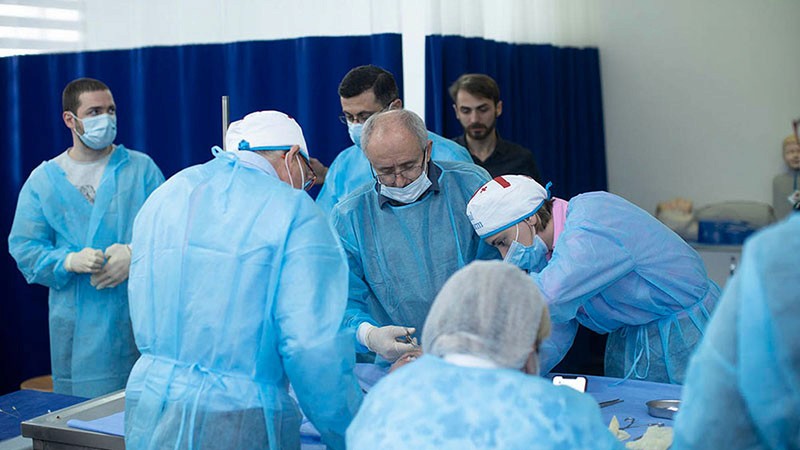
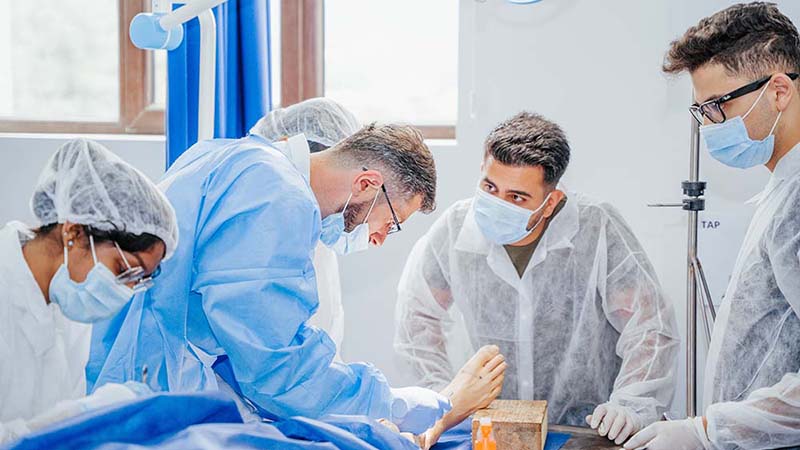
Each module specifies the hours for training in a clinical environment and focuses on the development of clinical competencies and practical skills from the outset. Throughout the program, problem-based learning (PBL) and case-based learning (CBL) methods are actively employed in interdisciplinary modules, which particularly enhance integration. This format eliminates the fragmented presentation of information and enables the development of independent clinical thinking and communication skills in the early stages of learning. Later, during clinical rotations, this approach supports a better understanding of medical disciplines. Additionally, each term facilitates the development and strengthening of medical professional competencies in the context of knowledge, skills, and belief formation.
The education program aims to train highly qualified physicians who are in accordance with national and international standards, possessing in-depth theoretical and evidence-based scientific knowledge, clinical skills, an innovative-technological vision, and liberal values. Additionally, the program aims to help students develop their skills in continuously deepening their ethical values, competencies, and knowledge; this forms the foundation of a physician's professional development. The program will facilitate the integration of graduates into the education and health sectors.
The goal of the program is also to cultivate a successful leader and an effective team member; to train a physician with knowledge of biomedical and medical clinical fields, developed clinical reasoning and intervention skills, high human values, and a sense of empathy. Furthermore, an important task of the program is to equip future physicians with the ability to communicate effectively with their colleagues, patients, and their families in the professional field. One of the objectives of the program is to ensure that the student understands their role and responsibilities in the public health system at regional, national, and international levels, and based on all this, to develop relevant professional values, accountability, and critical self-esteem. The program focuses on enhancing the student's professional and ethical values, research competencies, and efforts to continuously improve their knowledge; this is fundamental to the professional integrity of every expert in the field of health.
The single-level Medical Bachelor's program supports the realization of the university's mission; this mission serves to protect and improve public health by contributing to the adoption of high scientific and ethical standards in health education, providing new teaching methods, and continually developing modern educational approaches.